

01
Early airframe layout
The first Blender passes established the fuselage, wing placement, control surfaces, landing structure, and propulsion volume.
CA-1 development
CA-1 began as a Blender aircraft concept and developed into a flyable simulation prototype, a modular manufacturing study, and a structured plan for physical validation.
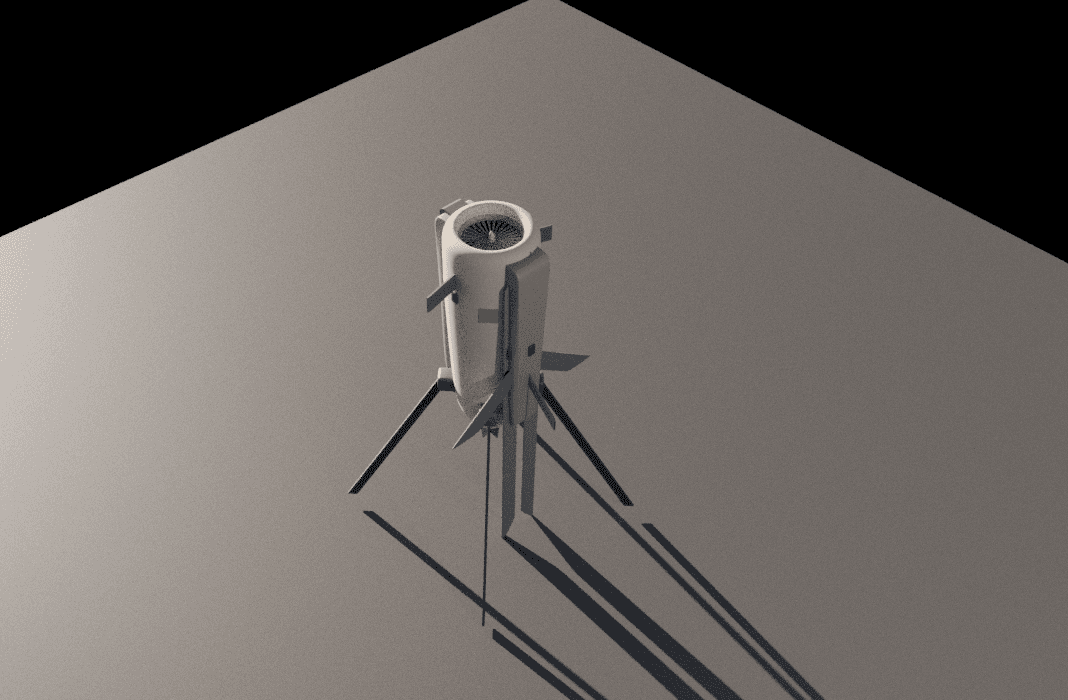
Simulation record
The CA-1 simulation was used to evaluate control-surface mapping, forward-flight behavior, balance, and the early transition concept. It remains a digital prototype rather than a flight-validated aircraft.
Blender process
The model was repeatedly reviewed from flight, landing, side, front, rear, and internal-layout perspectives before being used for simulation and visual development.
The first Blender passes established the fuselage, wing placement, control surfaces, landing structure, and propulsion volume.
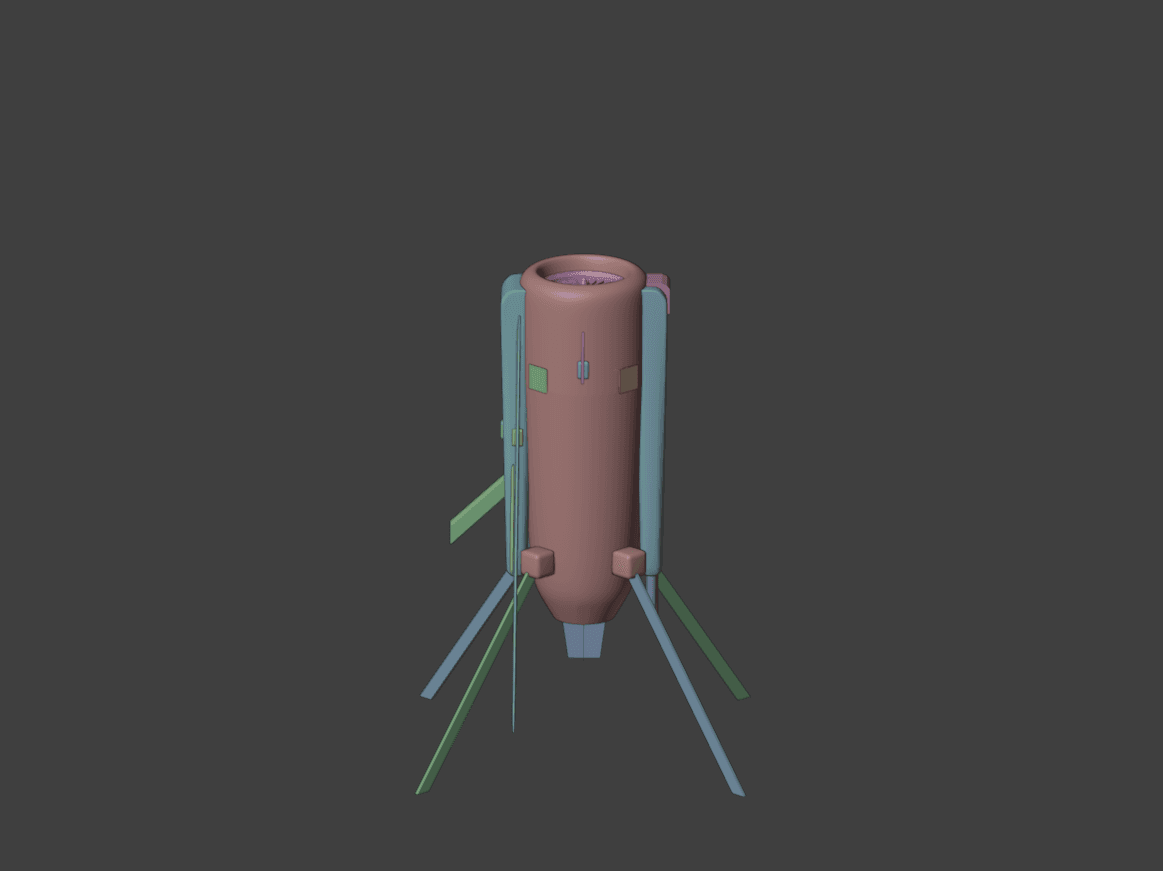
Transparent and wireframe views were used to review moving surfaces, internal clearances, and the relationship between major assemblies.
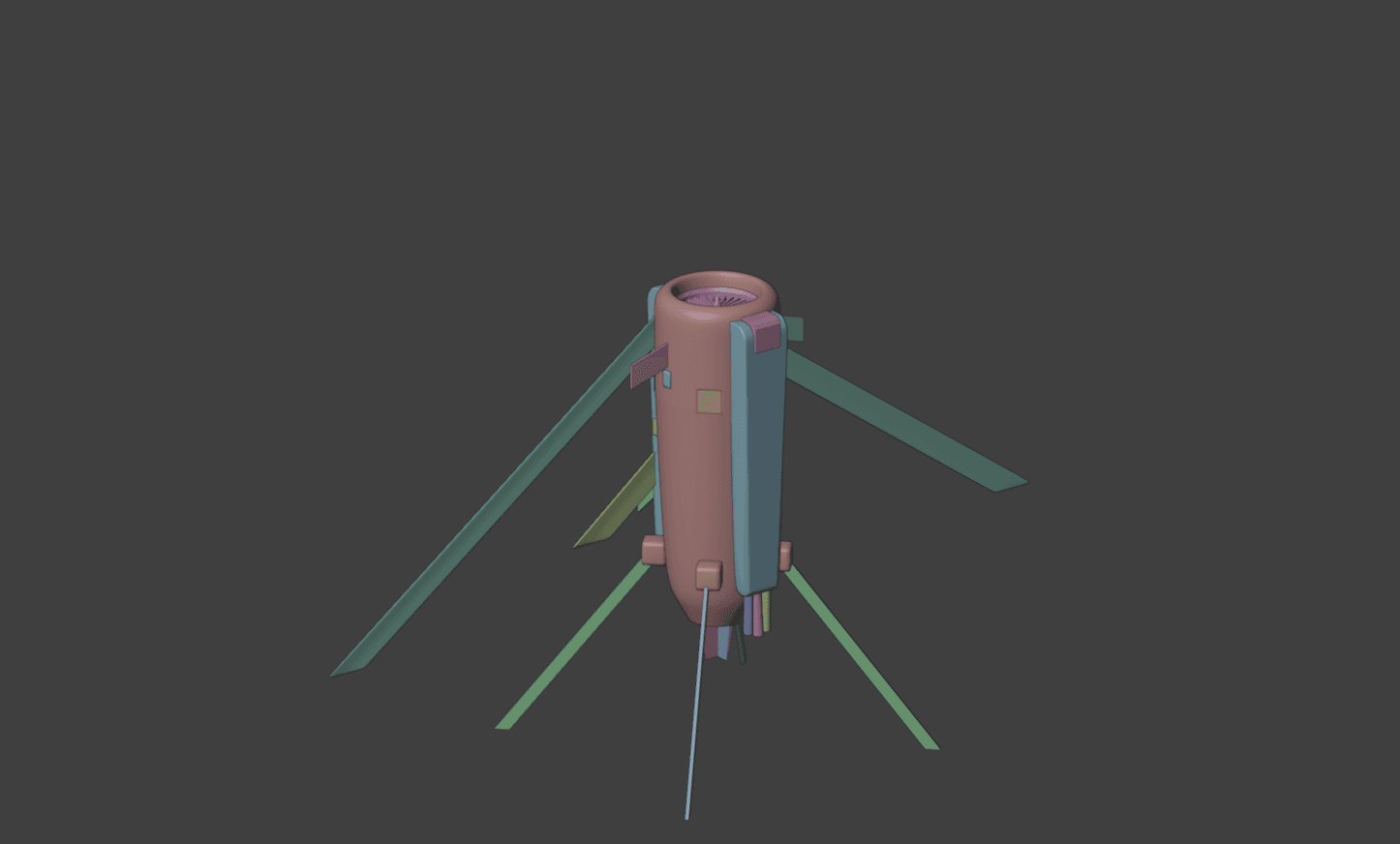
Side and three-quarter views helped refine the aircraft silhouette and balance the fuselage, wings, and landing supports.
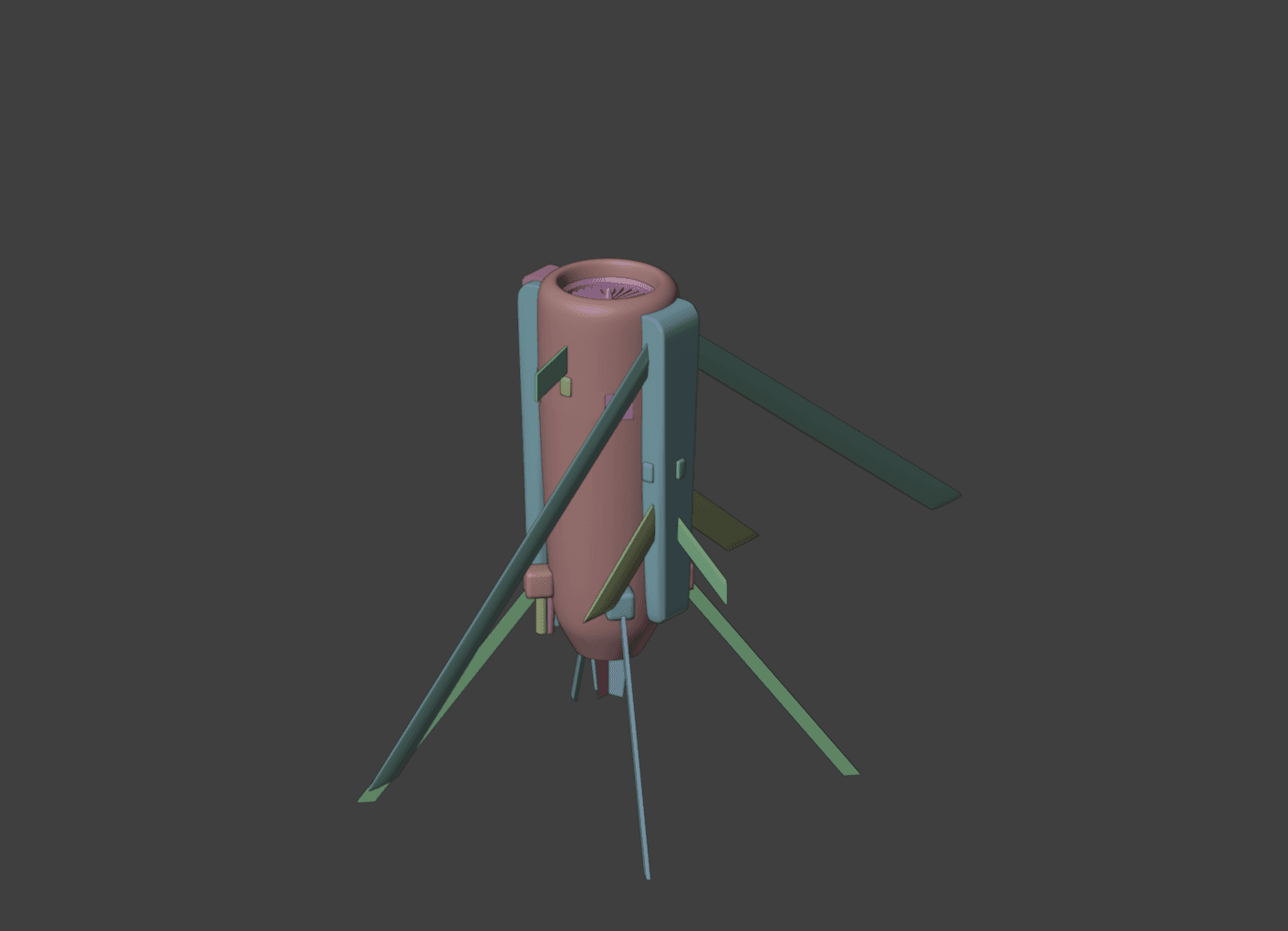
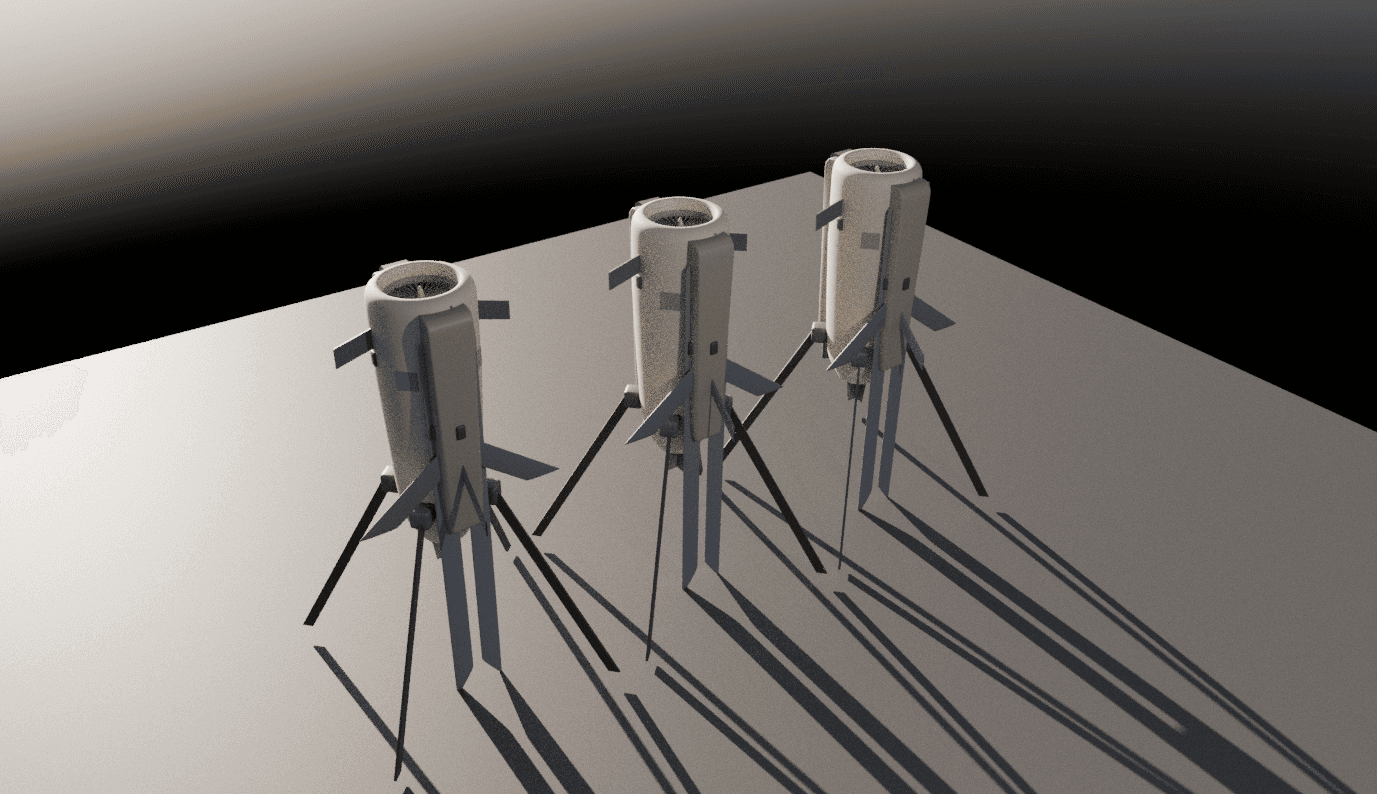
The tail-sitting configuration was developed around a stable support footprint, protected propulsion, and unobstructed control movement.
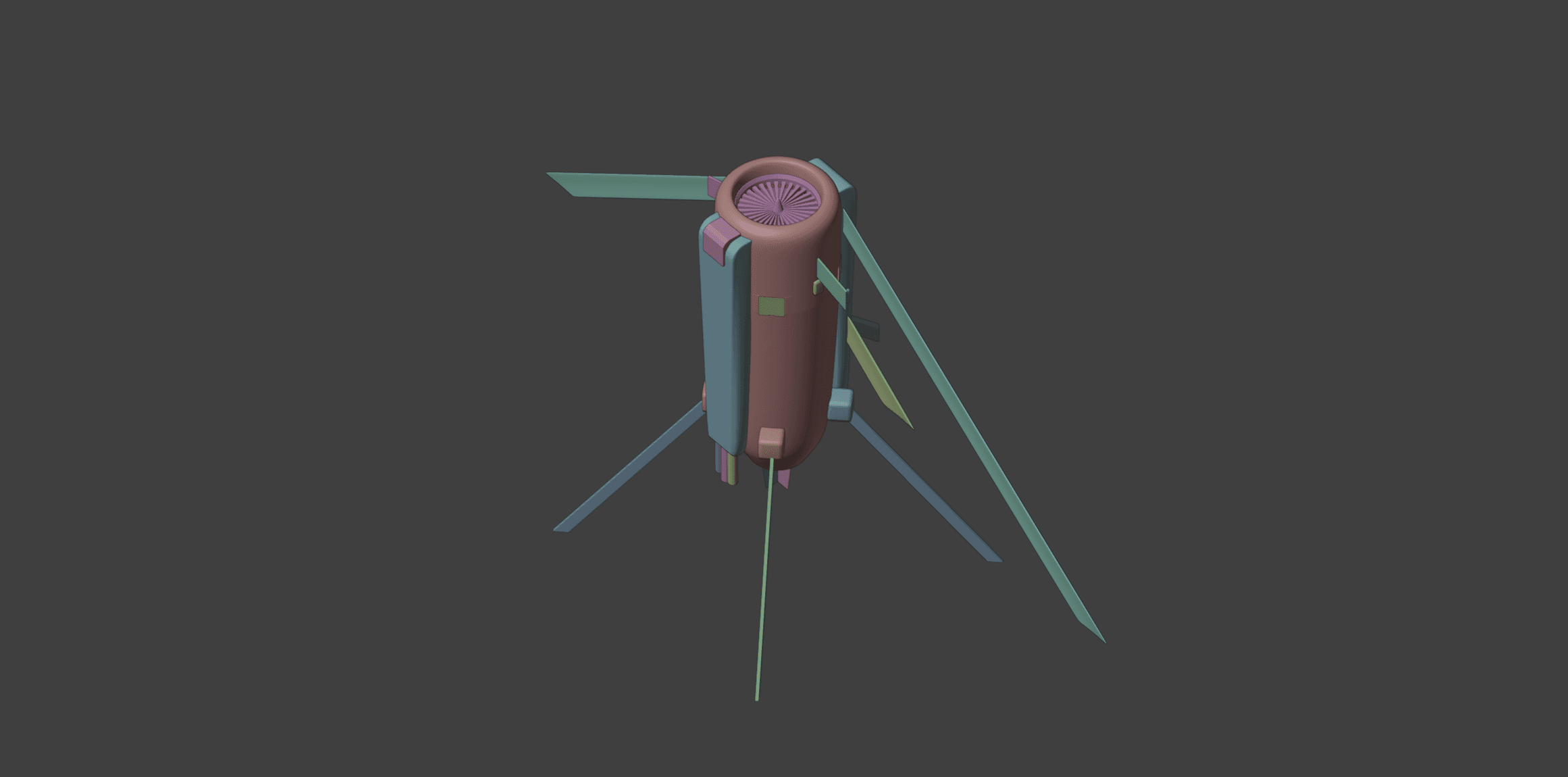
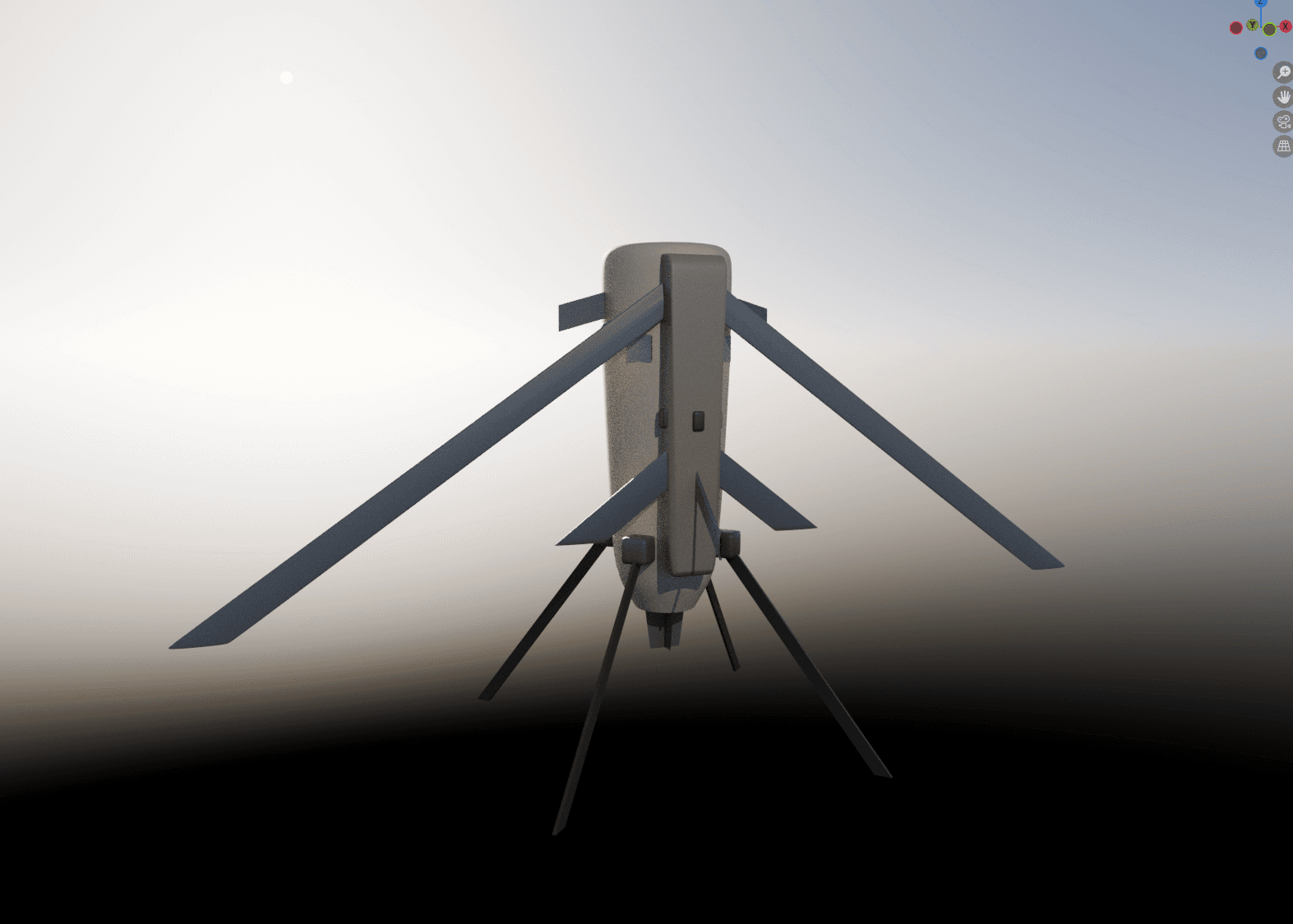
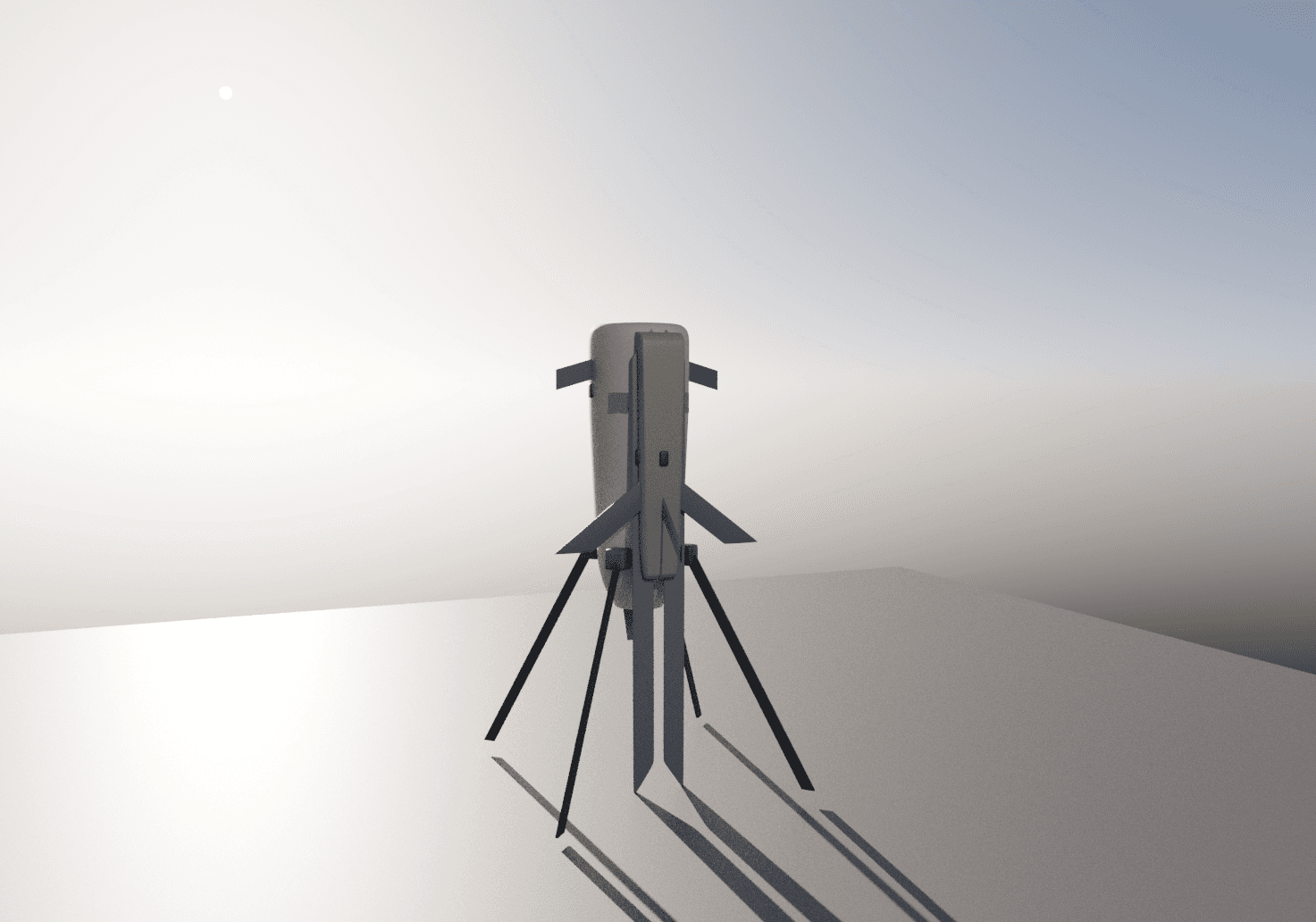
Rear views exposed asymmetry, landing-leg spacing, control-surface overlap, and packaging issues that were harder to see from the side.

Later revisions simplified the body, cleaned up the wing arrangement, and improved the modular layout for future prototyping.
Development method
Build the airframe, propulsion volume, wings, control surfaces, landing structure, and modular equipment areas in Blender.
Review clearances, proportions, centerline relationships, and moving geometry from multiple viewpoints.
Translate the aircraft into a flyable digital prototype and match the simulated surfaces to the intended physical design.
Evaluate forward flight, balance, control response, transition behavior, hover setup, and thrust-to-weight assumptions.
Use observed problems to update the aircraft layout, control strategy, component placement, and manufacturing plan.
Rendered studies
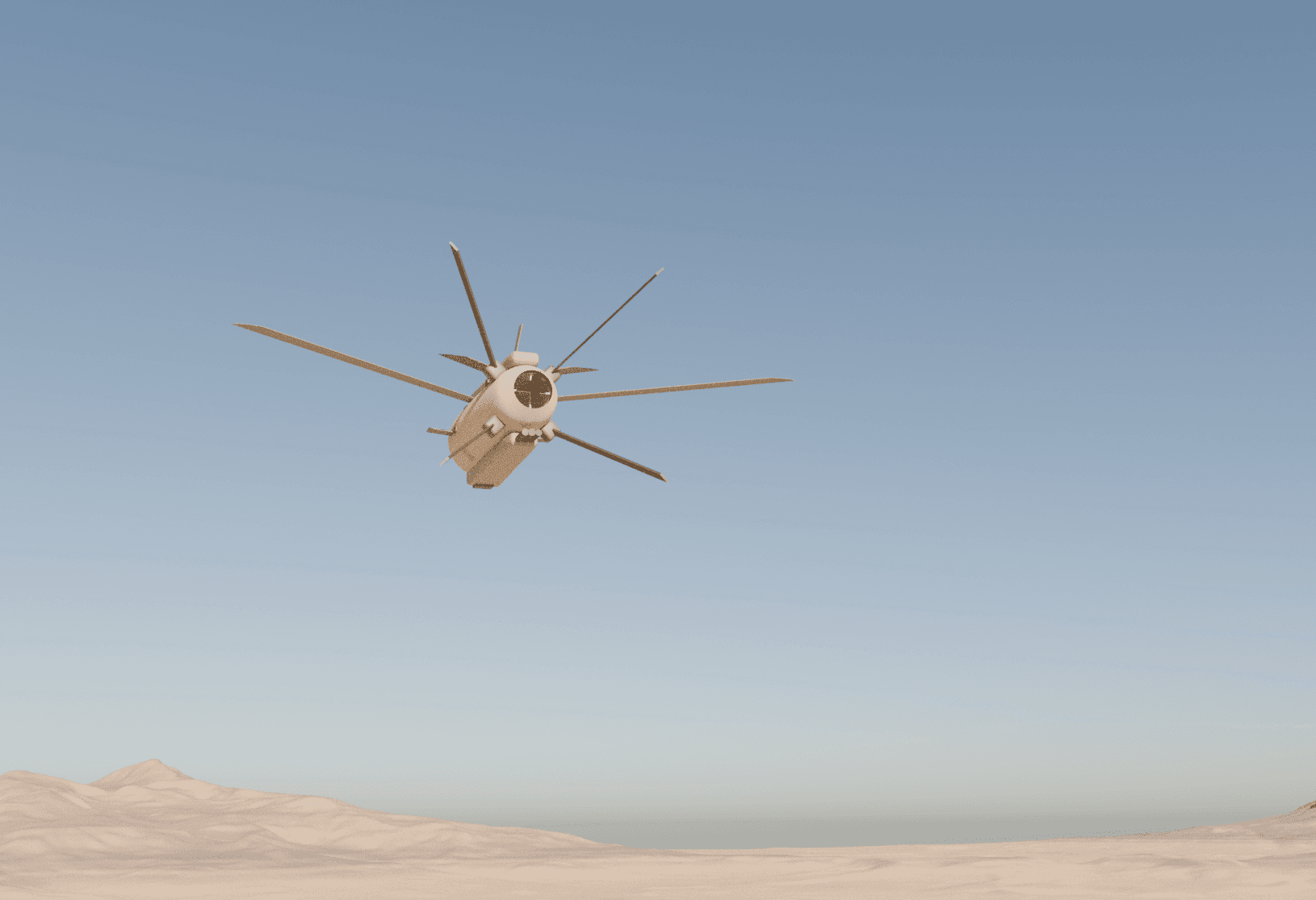
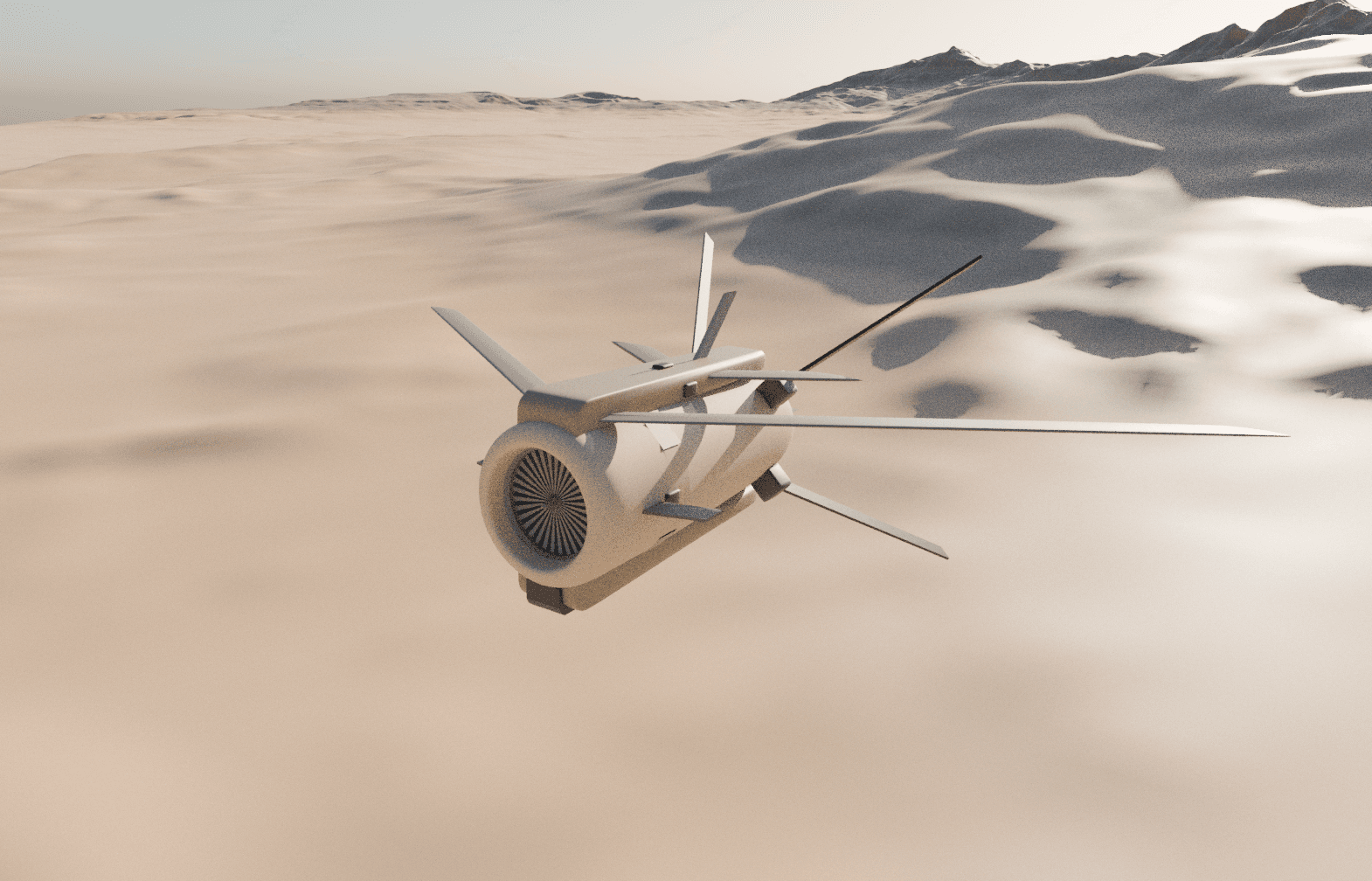
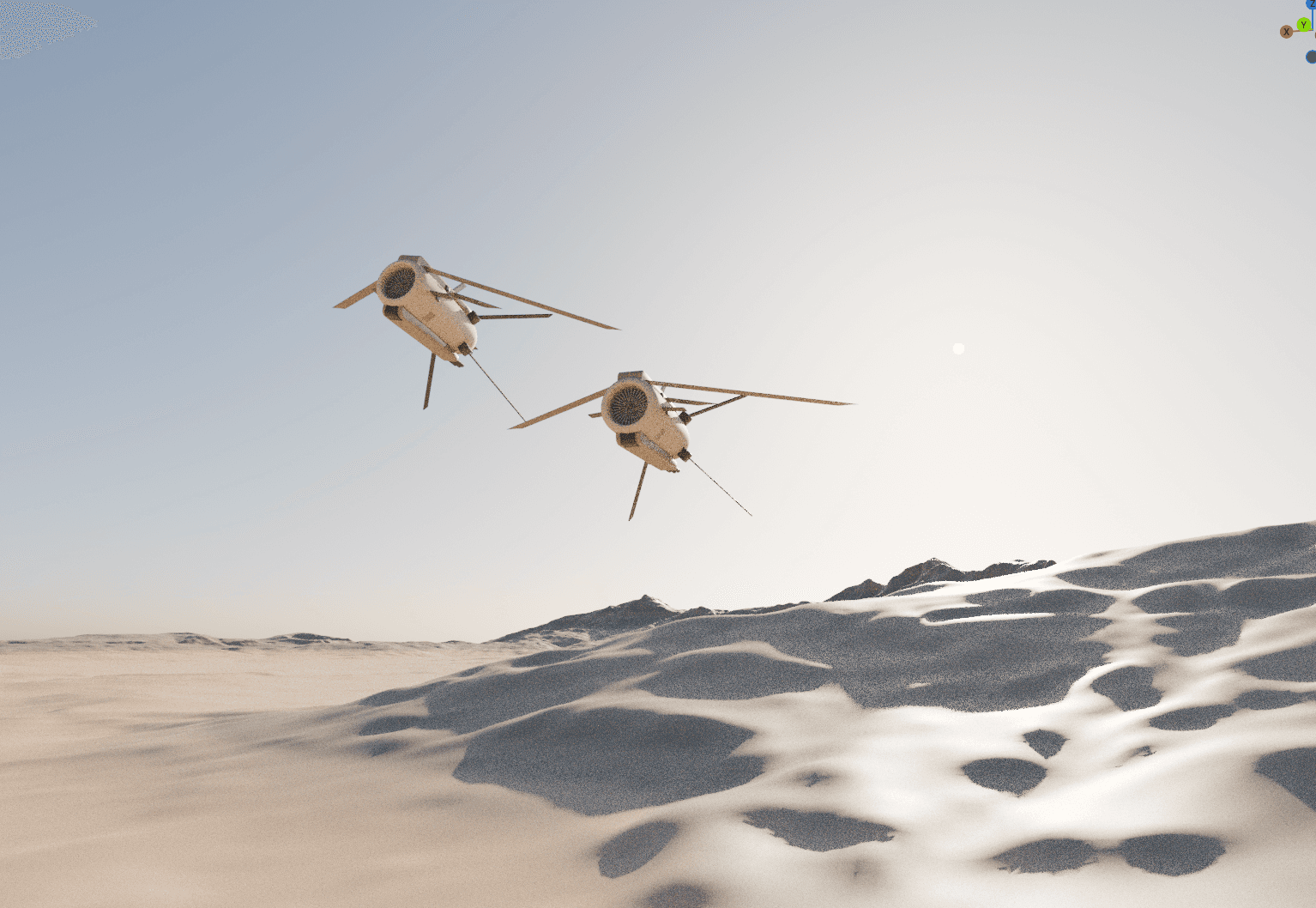
Later renders tested the aircraft in landing, forward-flight, and multi-platform scenes while exposing design issues that were less obvious in the modeling viewport.
Current status
The current work demonstrates aircraft concept development, Blender modeling, simulation setup, control-layout exploration, manufacturing planning, and iterative visual communication. Physical hover, transition, endurance, payload, acoustic, and autonomous capabilities still require engineering validation.
CA-1 is an independent, in-development digital and simulation prototype. Images and video document design exploration and do not represent a flight-certified or physically validated production aircraft.