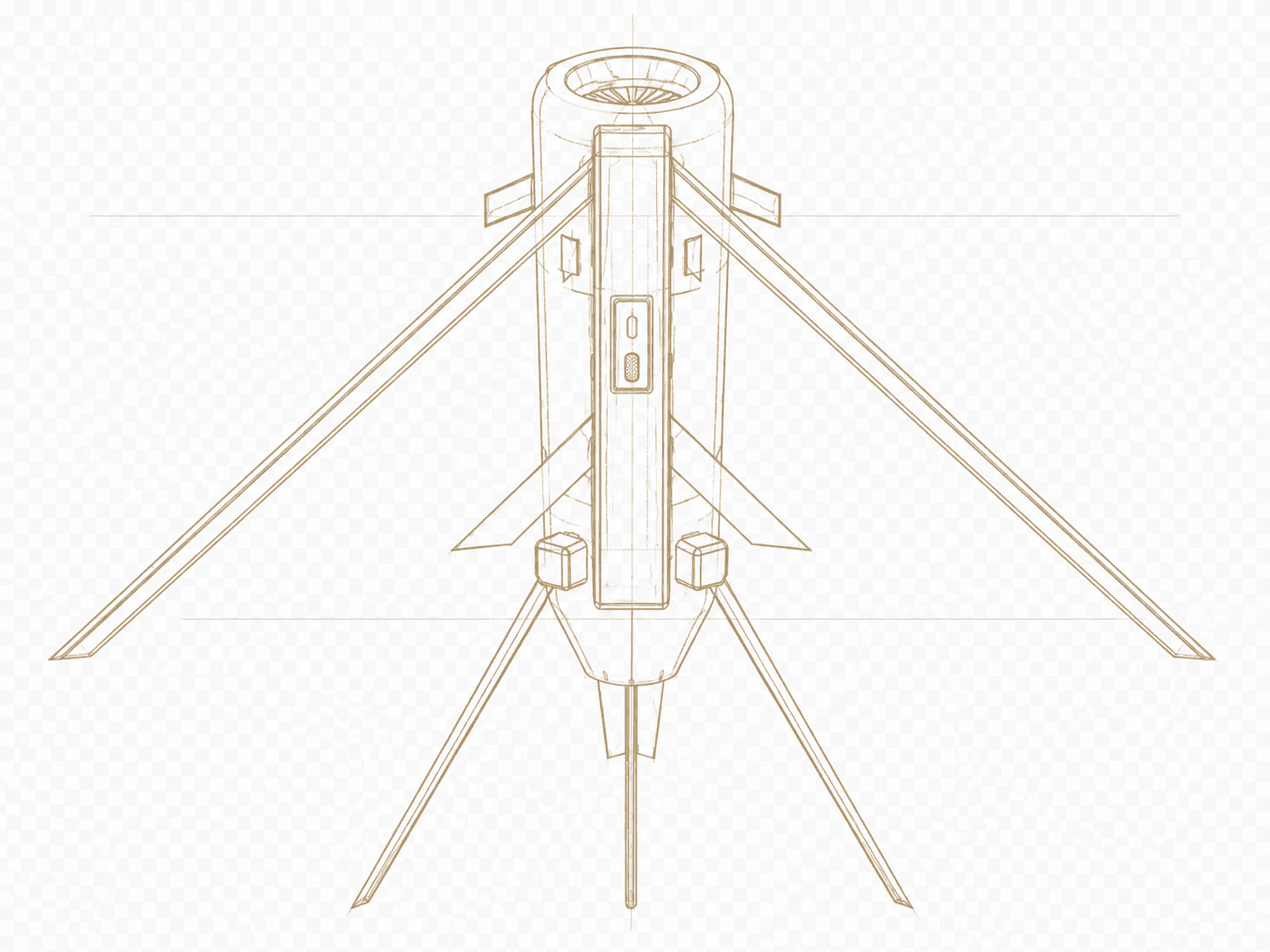
Electric ducted fan
Central propulsion architecture with an open upper intake.
CA-1 platform
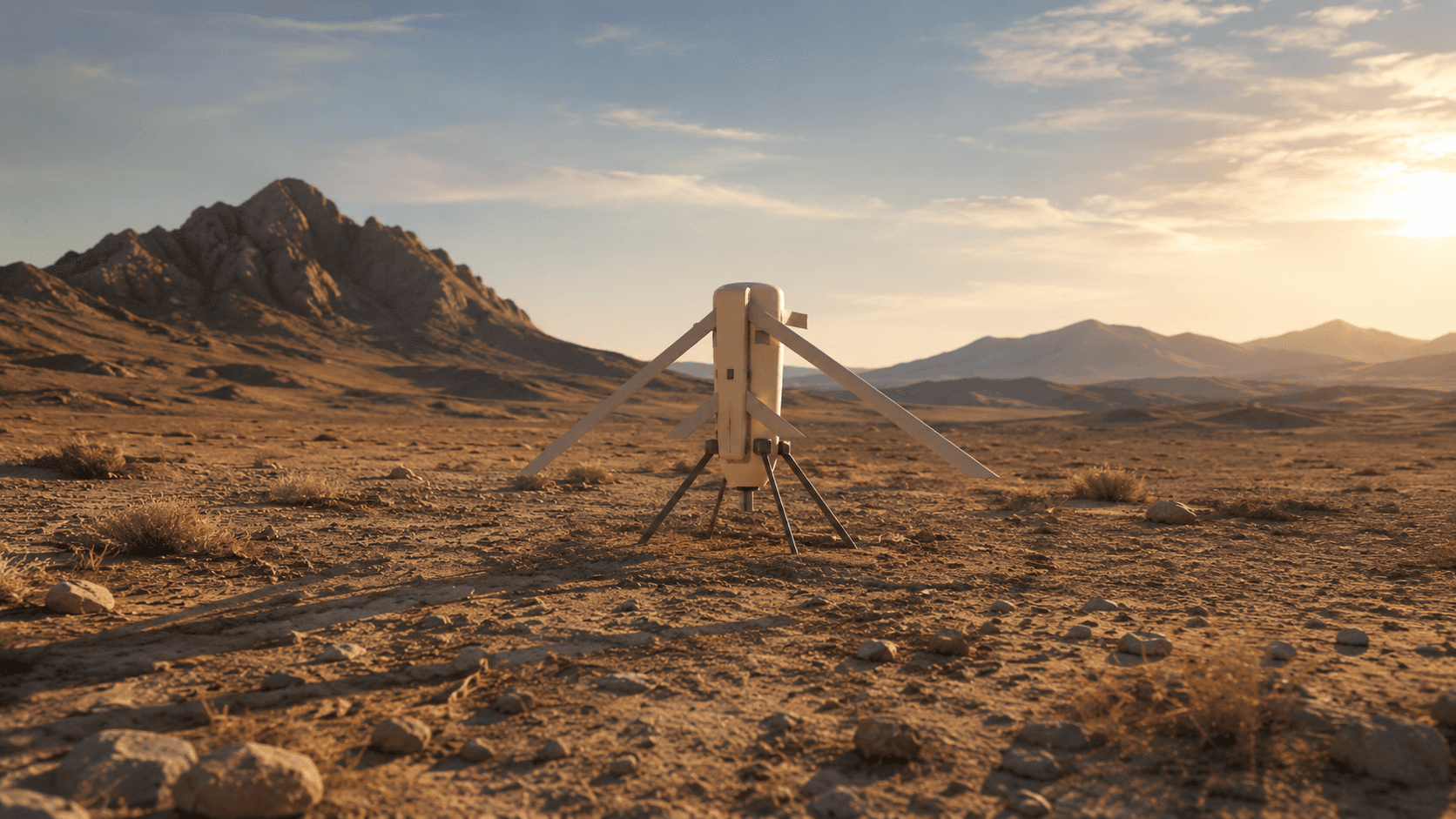
CA-1 is a modular thrust-vectoring VTOL platform combining efficient forward flight, automated vertical landing, machine-learning-assisted vision, quiet electric propulsion, and replaceable aircraft systems.
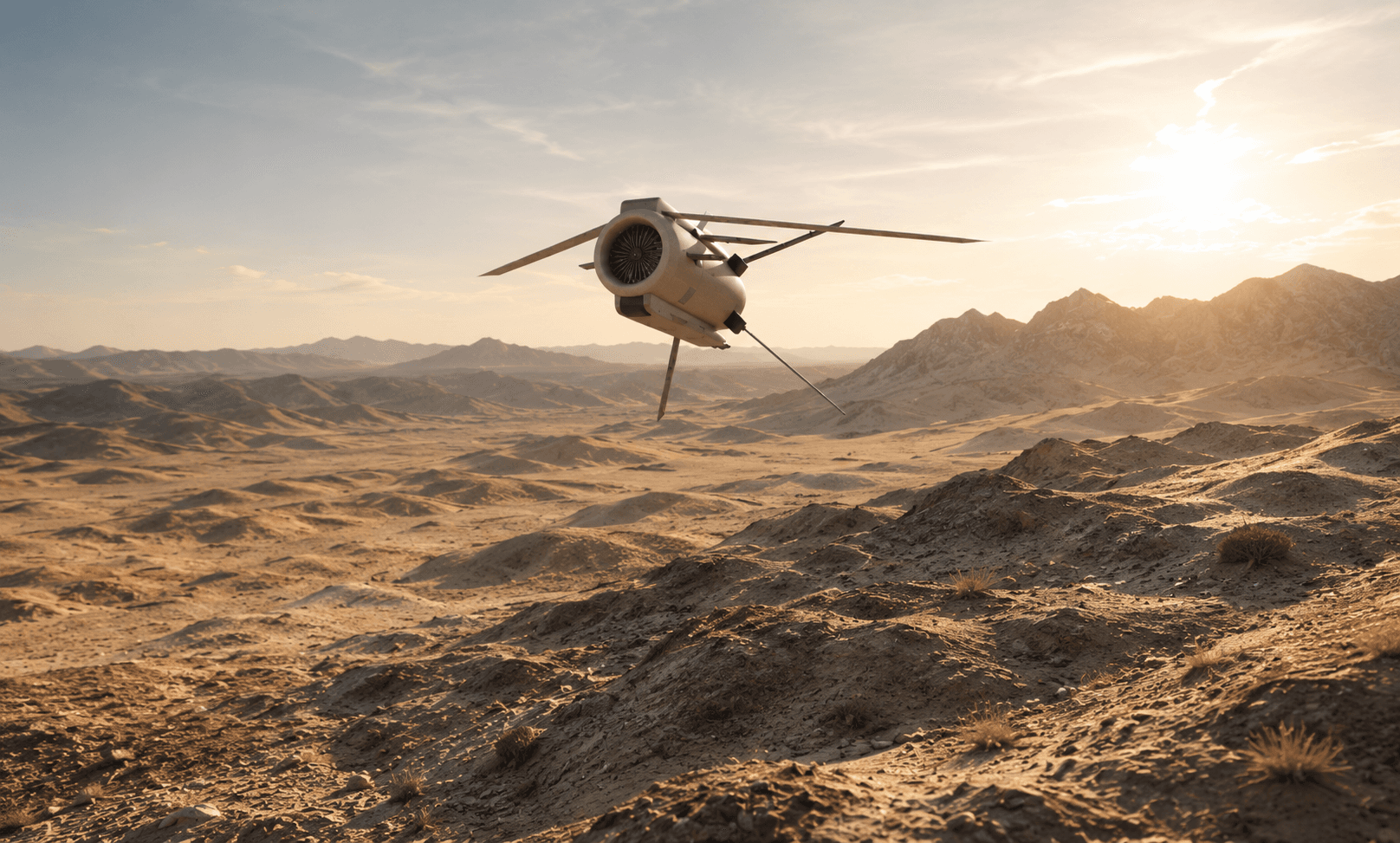
Central propulsion architecture with an open upper intake.
Directional control for hover, transition, and landing.
Landing-zone assessment, positioning, and obstacle awareness.
Replaceable sensing, communications, and mission equipment.
Core capabilities
The CA-1 is designed as a complete system rather than a collection of unrelated features.
The wings carry the aircraft during forward flight, reducing the propulsion demand required for efficient cruise.
The aircraft is being developed to pivot into a stabilized vertical attitude for landing, waiting, and relaunch.
Onboard perception supports scene understanding, visual positioning, obstacle awareness, and landing assessment.
Modular assemblies and additive components are intended to simplify repair, revision, and configuration changes.
Development process
Every simulation, prototype, and test creates engineering data for the next controlled revision.
Mission requirements, constraints, payloads, and test objectives establish the design direction.
Digital models evaluate packaging, balance, control surfaces, handling, and transition assumptions.
Revised components and mechanisms are produced through rapid additive and conventional manufacturing.
Bench, tethered-hover, acoustic, structural, and later flight tests measure real behavior.
Telemetry, machine-vision results, vibration, power use, and operator observations are reviewed.
Measured results become controlled updates to hardware, software, manufacturing, and procedures.
Flight architecture
CA-1 is being developed around a controlled transfer between efficient wing-borne flight, a rotating transition state, and stabilized vertical operation.
The wings carry the aircraft efficiently while aerodynamic surfaces provide primary control.
The aircraft reduces speed, rotates toward vertical, and transfers control authority toward thrust vectoring.
The central fan, vectoring system, airflow-control surfaces, and onboard sensing stabilize landing and relaunch.
Propulsion and control
CA-1 investigates an electric ducted-fan architecture influenced by modern acoustic-optimization research. The objective is to reduce prominent tonal noise while preserving the thrust and control authority required for vertical operation.
A direct airflow path supplies the central electric fan.
Rear thrust vectoring controls attitude during hover and transition.
Upper surfaces deploy during vertical operation to support stabilization.
Fan geometry, ducting, rotational speed, loading, and vibration require measured validation.
Machine-learning vision
Machine-learning-assisted vision is being developed to evaluate terrain, identify obstacles, support visual positioning, and improve landing-zone assessment. The same system can support inspection, mapping, classification, and environmental awareness.
Modular construction
Individual assemblies are intended to be inspected, replaced, revised, or upgraded without rebuilding the complete platform.
Common aircraft architecture
CA-1Propulsion, structure, avionics, power, payload, communications, and control connected through one reusable aircraft platform.Manufacturing system
The manufacturing strategy connects digital engineering, additive production, sourced structural hardware, inspection, component traceability, and repeatable assembly.
Suitable noncritical ducts, mounts, access panels, housings, and interfaces can be produced without dedicated tooling.
Carbon-fiber elements, standard fasteners, electronics, and conventional materials support practical sourcing.
Machine-assisted tools support packaging studies, interference checks, geometry exploration, and revision planning.
Digital work instructions, serialized components, inspection points, and revision history connect hardware to engineering data.
Individual systems are intended to be removed, inspected, repaired, upgraded, or replaced without rebuilding the aircraft.
The long-term production model uses repeatable manufacturing cells that can expand with demand.
Development status
Aircraft geometry, primary packaging, control surfaces, and propulsion arrangement are represented digitally.
Forward-flight behavior, center-of-gravity assumptions, control layout, and handling are being evaluated.
Hover stabilization, transition logic, actuator mixing, and thrust-vectoring authority remain under refinement.
Bench, acoustic, tethered-hover, structural, and complete flight testing remain future development stages.
Cejner Aerospace
CA-1 connects simulation, machine learning, modular hardware, digital manufacturing, and repeated testing through one controlled development program.
CA-1 is an in-development digital and simulation prototype. Flight performance, autonomy, acoustic characteristics, transition behavior, payload capacity, endurance, and manufacturing methods remain subject to engineering development and physical validation.